Panama is one of the most open real estate markets in Latin America: you buy and rent in US dollars, foreigners have the same property rights as Panamanians, and ownership is recorded in a Public Registry that anyone can check. This guide sums up how each kind of deal works and points you to the detailed guide when you need more.
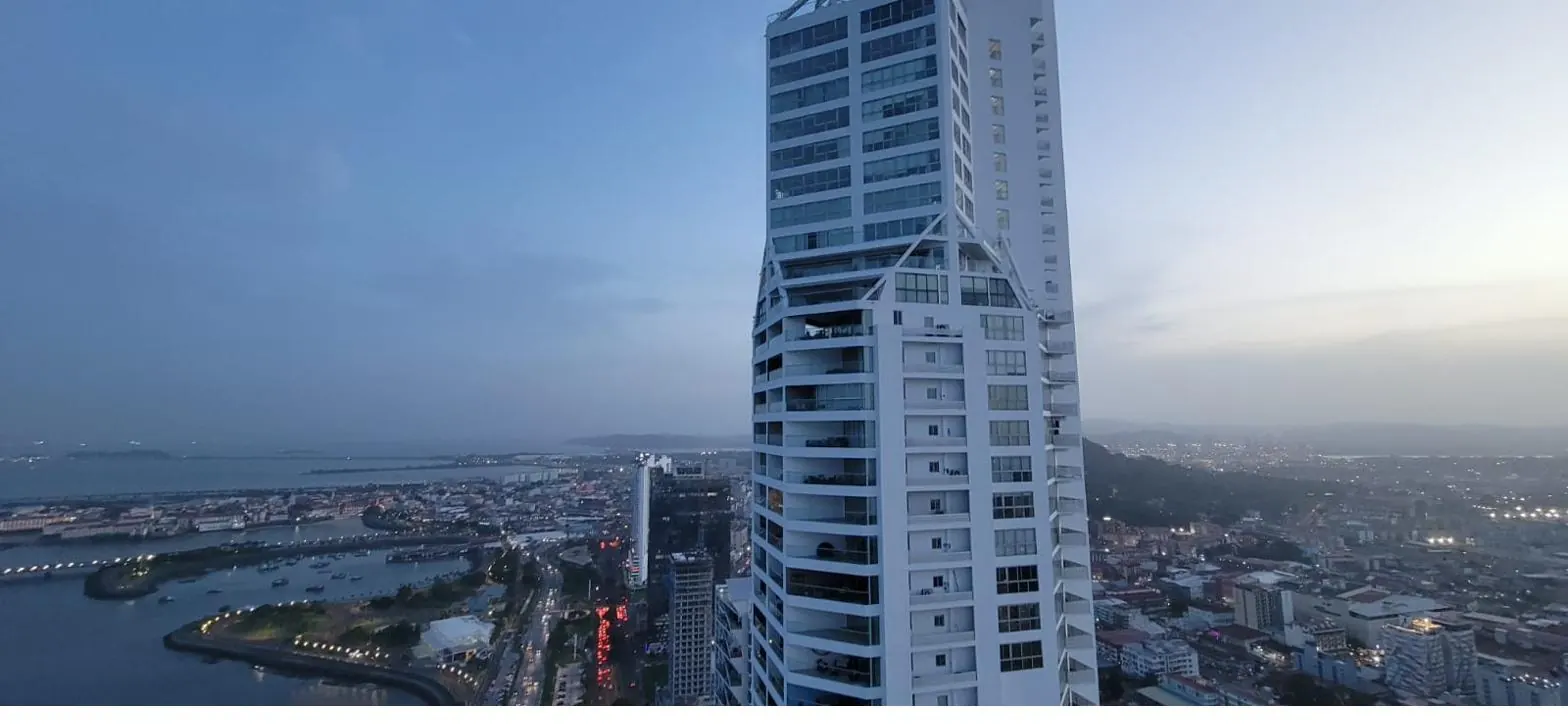
How Panama real estate works
- Dollars: the US dollar is legal tender, so there is no currency risk when you buy or rent.
- Equal rights: a foreigner can buy, rent, mortgage and inherit property in their own name. The exception: under Article 286 of the Constitution, foreigners cannot acquire land within ten kilometers of the borders.
- Title or possession rights: titled property is recorded at the Public Registry; possession rights (derecho posesorio) are only a right to occupy untitled land, cheaper and riskier.
- Condominium (PH): this is how apartments are owned: your unit is yours, you share the common areas and pay a maintenance fee under the building's rules.
For prices, areas and trends, read the Panama real estate market in 2026 and the best areas to invest in the city.
Buying a property, step by step
It usually takes 30 to 60 days. On top of the price, a buyer should budget 2% to 5% for closing costs (lawyer, notary and registry); the 2% transfer tax is traditionally paid by the seller.
More detail in buying as a foreigner, costs and taxes, what to check before you sign, the 5 costliest mistakes, buying pre-construction, mortgages for foreigners, preferential interest and the mortgage calculator.
Renting a home
To rent you only need your cédula or passport; no residency is required. You normally pay a one-month deposit plus the first month in advance, with a written lease, usually for a year. Under Law 93 of 1973, the deposit equals one month's rent.
Read how to rent an apartment in Panama or ask us for options: we find rentals anywhere in Panama, not only from our own listings.
If you want to sell or let yours
When you sell, the seller pays the transfer tax (2% of the higher of the price and the cadastral value) and capital gains tax, settled in advance as 3% of the sale value. Having your clearance certificates up to date speeds up closing. If you would rather rent it out, the tenant's deposit is lodged through Banco Nacional or Caja de Ahorros under MIVIOT's control.
Read how to sell your property, how to rent out your property and how property tax is calculated. If you like, we list your property in four languages.
Investing and getting residency
Buying titled property can be used to apply for permanent residency as a Qualified Investor. Under the new decree of September 2026, the minimum stays at US$300,000 for a new property sold for the first time; for a resale property it is US$500,000 (Revista EyN). Confirm the current requirements with an immigration lawyer before you buy for that purpose. Retirees usually choose the Pensionado visa, which depends on a pension rather than a purchase.
Read investing in Panama real estate, residency through real estate, the Pensionado visa and retiring in Panama.
Where to buy or live
Panama City has the most supply, in areas such as Costa del Este, Punta Pacífica, San Francisco and Bella Vista. Panamá Oeste offers houses at lower prices; the Pacific beaches draw second-home buyers; and the mountains, such as El Valle de Antón or Boquete, suit people who want a cooler climate.
Compare living in Panama City, the best places to live, the beach towns, El Valle de Antón, Santa Catalina and Coiba and the cost of living.
Who to work with
Work with a licensed broker and an independent lawyer who represents only you. The broker finds the property and negotiates; the lawyer checks the title and drafts the contracts. Before you pay anything, verify the broker’s license: it takes five minutes.
Urban Realty Panama works under broker license PN-4871 and helps you in English, Spanish, Portuguese and Russian.
Frequently asked questions
Can a foreigner buy property in Panama?
Yes, with the same rights as a Panamanian. The exception is land within ten kilometers of the borders, which Article 286 of the Constitution does not allow foreigners to acquire.
What currency is used to buy and rent property in Panama?
In US dollars, which are legal tender in Panama alongside the balboa.
How much does buying cost on top of the price?
For the buyer, 2% to 5% of the price in closing costs: lawyer, notary and Public Registry. The 2% transfer tax is traditionally paid by the seller.
How long does a purchase take in Panama?
Usually 30 to 60 days from the promise to purchase to registration at the Public Registry. With a mortgage it can take longer.
Do I need residency to buy or rent in Panama?
No. You can buy or rent with your passport.
Sources: Constitución de Panamá, art. 286 · Ley 93 de 1973 · MICI, nuevo decreto de Inversionista Calificado (septiembre 2026) · Revista EyN, septiembre 2026